
Hardware & kinetics
Robotic Surgical Systems
Zero-trust control paths between console, manipulators and imaging. Secure boot, tamper response and encrypted kinetics, tuned to the real-time loop.
MShield maps every component in your device, scores each new CVE by its clinical impact, and keeps FDA and EU MDR evidence current from R&D through post-market surveillance.
Aligned to FDA 21 CFR Part 11, EU MDR 2017/745, IEC 62443 and ISO 14971.
MShield watches the exact components inside your deployed device, ranks each vulnerability by clinical impact and maps it to the control your auditor will ask about. Security and regulatory teams work from the same view.
| Component | Finding | CVSS | Clinical impact | Mapped control | Status |
|---|---|---|---|---|---|
| openssl 3.0 | Known CVE match | 7.5 | High, therapy interruption | IEC 62443 SR 4.3 | Triaging |
| BLE stack | Pairing weakness | 6.1 | Medium, data exposure | FDA SPDF | Mitigating |
| bootloader | Unsigned update path | 7.9 | High, device integrity | IEC 62443 CR 3.4 | Fixed in 4.2.1 |
| busybox | Known CVE match | 5.3 | Low, no patient path | ISO 14971 | Risk accepted |
A therapy interruption outranks a higher CVSS with no path to the patient.
Matched to this device's SBOM, not the entire NVD.
Each finding links to its IEC 62443, FDA or ISO 14971 control.
Illustrative product view with example data.
Automated, evidence-backed gates replace manual review at every phase, without losing the clinical rigor regulators require.
MShield's proprietary model brings threat intelligence, compliance automation and lifecycle tracking into one auditable system. Follow a connected infusion pump through it.
Raw telemetry, firmware metadata and component manifests stream in from connected medical devices across the fleet.
CVSS alone isn't enough. MShield overlays patient safety impact, device criticality and regulatory exposure, the ISO 14971 way.
Every finding is mapped automatically to the FDA, EU MDR or IEC 62443 control it touches, so every fix is compliance-aware.
Prioritised remediation workflows, audit-ready reports and real-time dashboards go straight to security and regulatory teams.
MShield replaces manual security reviews with automated, evidence-backed gates, cutting weeks from each phase.
Automated threat modeling against IEC 62443 and ISO 14971 replaces weeks of manual architecture review. MShield generates a structured risk register and SBOM from your design artifacts on day one.
Every connection creates another clinical dependency. Point-in-time compliance is no longer enough, because cyber risk is inseparable from patient safety.
Hospital networks are flat, legacy and full of devices that can't be rebooted. MShield models them as they are, then enforces the zones and conduits IEC 62443 expects.
Generic security tools miss device-specific attack surfaces. MShield's model is trained exclusively on medical device threat data, so it knows which path reaches a patient and where to stop it.
FDA 21 CFR Part 11, EU MDR 2017/745 and IEC 62443 aren't add-ons. They are the architecture.
Security posture is maintained across the full device lifecycle, not just at submission checkpoints.
Every action, finding and remediation is logged in a structured, auditable format.
Zero-trust control paths between console, manipulators and imaging. Secure boot, tamper response and encrypted kinetics, tuned to the real-time loop.
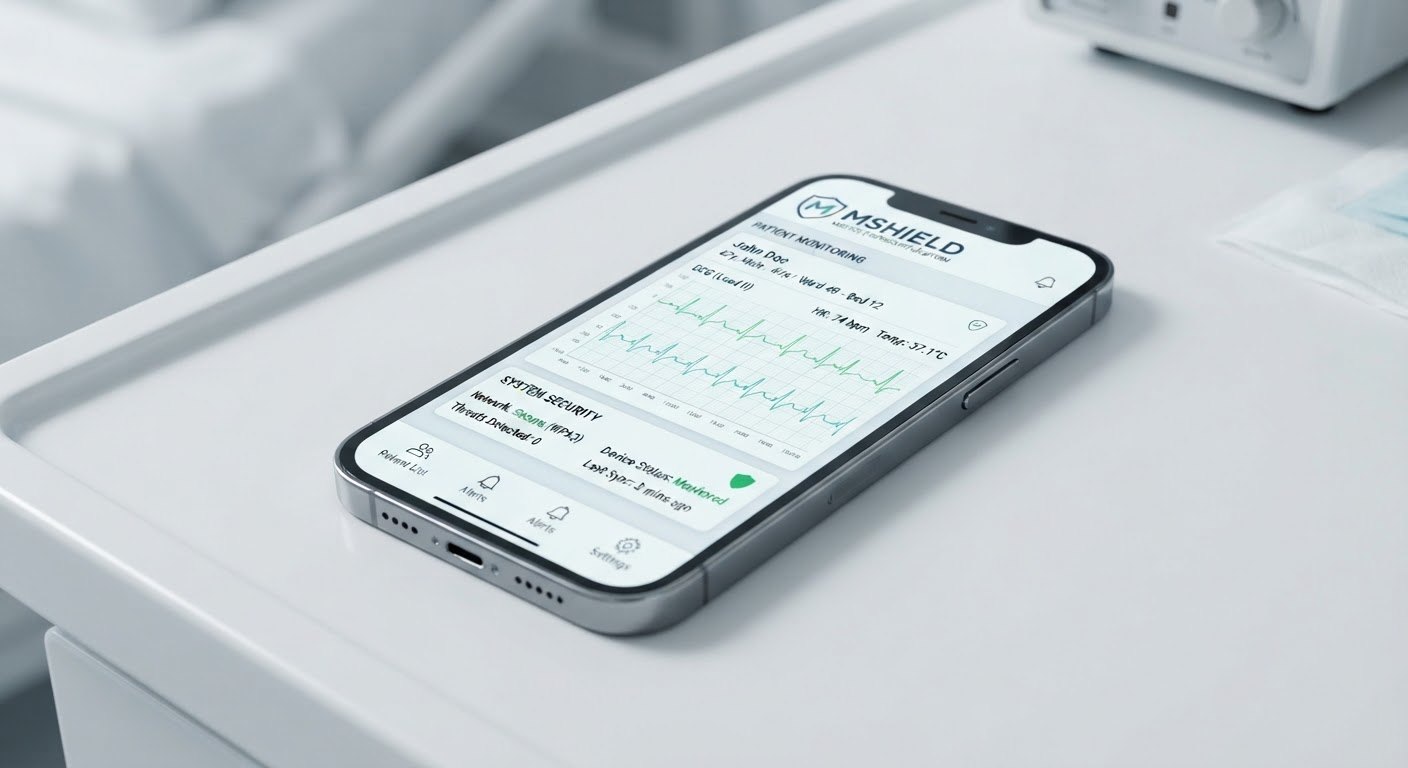
Patient identity, PHI privacy and secure integrations for the companion apps and cloud services around every device.

Secure SDLC, runtime integrity and vulnerability management that resolve straight into submission evidence.
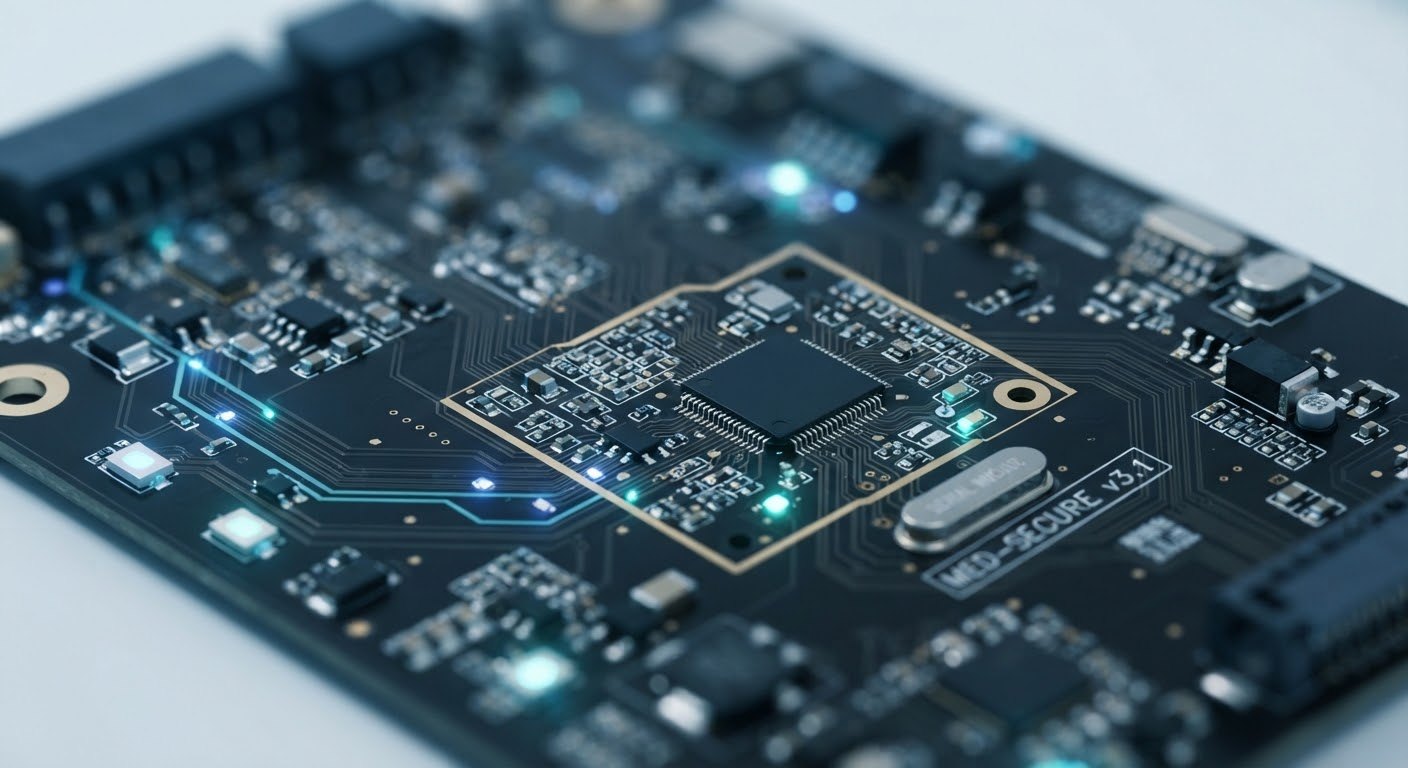
Secure boot chains, firmware hardening, protocol assessment and anti-rollback for embedded platforms.
MShield connects to source control, CI/CD, issue tracking and your QMS, so security evidence flows into your submission without anyone copying it across.
Security architects and regulatory leads want to see real outputs before they sign. Here are sample files for a fictional infusion pump, with a note on what each part is for.
1{2 "bomFormat": "CycloneDX",3 "specVersion": "1.6",4 "serialNumber": "urn:uuid:7c1f0b52-9e4d-4a8e-b2f1-3d6a90c4e118",5 "metadata": {6 "timestamp": "2026-09-14T08:42:17Z",7 "component": {8 "type": "device", "name": "Sample infusion pump", "version": "4.2.1"9 }10 },11 "components": [12 { "bom-ref": "fw-ctrl", "type": "firmware",13 "name": "pump-controller", "version": "4.2.1",14 "hashes": [{ "alg": "SHA-256", "content": "9f2c7d…e41a" }] },15 { "bom-ref": "ble", "type": "library",16 "name": "ble-stack", "version": "5.2.3",17 "purl": "pkg:generic/example-silicon/ble-stack@5.2.3" },18 { "bom-ref": "rtos", "type": "operating-system",19 "name": "rtos-kernel", "version": "10.5.1" }20 ],21 "vulnerabilities": [22 { "id": "CVE-2026-24817", "source": { "name": "NVD" },23 "ratings": [{ "method": "CVSSv31", "score": 8.1, "severity": "high" }],24 "affects": [{ "ref": "ble" }] }25 ]26}
Aligned to 21 CFR Part 11 electronic records requirements, with tamper-evident logs.
Every build artifact is signed and carries an integrity attestation.
SBOMs are generated in CycloneDX and SPDX, the two formats reviewers and tools expect.
Every finding traces to an ISO 14971 clinical risk category, not just a CVSS score.
Findings map to FDA premarket guidance, EU MDR Annex I and IEC 62443 controls, with evidence citations.
Files you send for expert review are encrypted in transit and at rest, and handled under NDA.
Request a live demonstration of our proprietary lifecycle security model and see how MShield maps to your device's regulatory requirements.